
Meest populaire keuze – Scherpste prijs!

Amazon Marketplace· Marketplace
€ 63,38
3 tot 4 dagenGratis verzending
Check de website voor de levertijd | Gratis bezorgd > €25,-

Heb jij dit product in bezit en wil je graag je mening geven? Start dan hieronder met het schrijven van je review. Afhankelijk van de details duurt het schrijven van een review gemiddeld tussen de 3 en 10 minuten. Met jouw mening help je andere bezoekers een betere keuze te maken én maak je iedere maand kans op €250,-! Klik hier voor de actievoorwaarden.
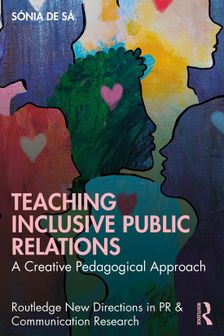
This volume offers a critical and applied reflection on the space for creativity, art, and equity in Inclusive Public Relations teaching, arguing that these dimensions are as complementary as they are fundamental to the practice of the field in this contemporary world.
This volume offers a critical and applied reflection on the space for creativity, art, and equity in Inclusive Public Relations (IPR) teaching, arguing that these dimensions are as complementary as they are fundamental to the practice of the field in this contemporary world. It is based on empirical evidence collected from various Portuguese higher education institutions and a robust theoretical framework that integrates critical, dialogical, and intersectional perspectives to present an innovative pedagogical model that combines academic and scientific rigor, community involvement, and social responsibility.
By articulating theory, methodology, and practice, the book offers an original contribution to the renewal of Public Relations (PR) pedagogies, with a focus on IPR, demonstrating that inclusion, when sustained by creativity, art, and equity, is an essential vector of innovation, institutional reputation, and social transformation. By embedding these values into PR curricula and pedagogy, we can ensure that future PR professionals are not only skilled communicators but also advocates for social justice, diversity, and creative innovation. The book concludes with ten lessons for teaching inclusive PR, combining theory and practice for real-world application.
This unique book will be a valuable resource for academics across public relations and communication studies.
