Hot Deal Alert

Amazon· Bekende aanbieder
€ 211,63
3 tot 4 dagenVerz. € 5,34
Check de website voor de levertijd | Gratis bezorgd > €20,-



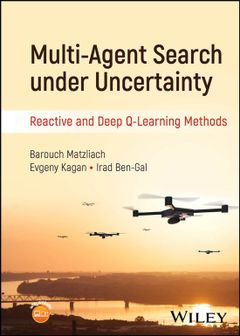
When multiple robots must locate targets in presence of false positive and false negative detection errors, path planning becomes extraordinarily complex. Multi-Agent Search under Uncertainty addresses this challenge directly. Written by researchers with combined expertise spanning defense systems, applied mathematics, and machine learning, this book delivers both theoretical foundations in search and screening theory and ready-to-use algorithms for practical implementation.
The book covers cooperative search and navigation methods for autonomous mobile agents operating with incomplete or noisy information. Readers learn how Deep Q-Learning enables robots to develop complex behaviors through trial-and-error interactions rather than pre-programmed instructions. Applications span search and rescue operations, military surveillance, environmental monitoring, and security systems. An accompanying website provides Python code for simulation practice.
Key topics include:
Designed for graduate students and researchers in robotics and reinforcement learning, this book bridges advanced theory with practical application. Professional developers building autonomous systems will find algorithms tested in real-world robotic development.
When multiple robots must locate targets in presence of false positive and false negative detection errors, path planning becomes extraordinarily complex. Multi-Agent Search under Uncertainty addresses this challenge directly. Written by researchers with combined expertise spanning defense systems, applied mathematics, and machine learning, this book delivers both theoretical foundations in search and screening theory and ready-to-use algorithms for practical implementation.
The book covers cooperative search and navigation methods for autonomous mobile agents operating with incomplete or noisy information. Readers learn how Deep Q-Learning enables robots to develop complex behaviors through trial-and-error interactions rather than pre-programmed instructions. Applications span search and rescue operations, military surveillance, environmental monitoring, and security systems. An accompanying website provides Python code for simulation practice.
Key topics include:
Designed for graduate students and researchers in robotics and reinforcement learning, this book bridges advanced theory with practical application. Professional developers building autonomous systems will find algorithms tested in real-world robotic development.
Heb jij dit product in bezit en wil je graag je mening geven? Start dan hieronder met het schrijven van je review. Afhankelijk van de details duurt het schrijven van een review gemiddeld tussen de 3 en 10 minuten. Met jouw mening help je andere bezoekers een betere keuze te maken én maak je iedere maand kans op €250,-! Klik hier voor de actievoorwaarden.
